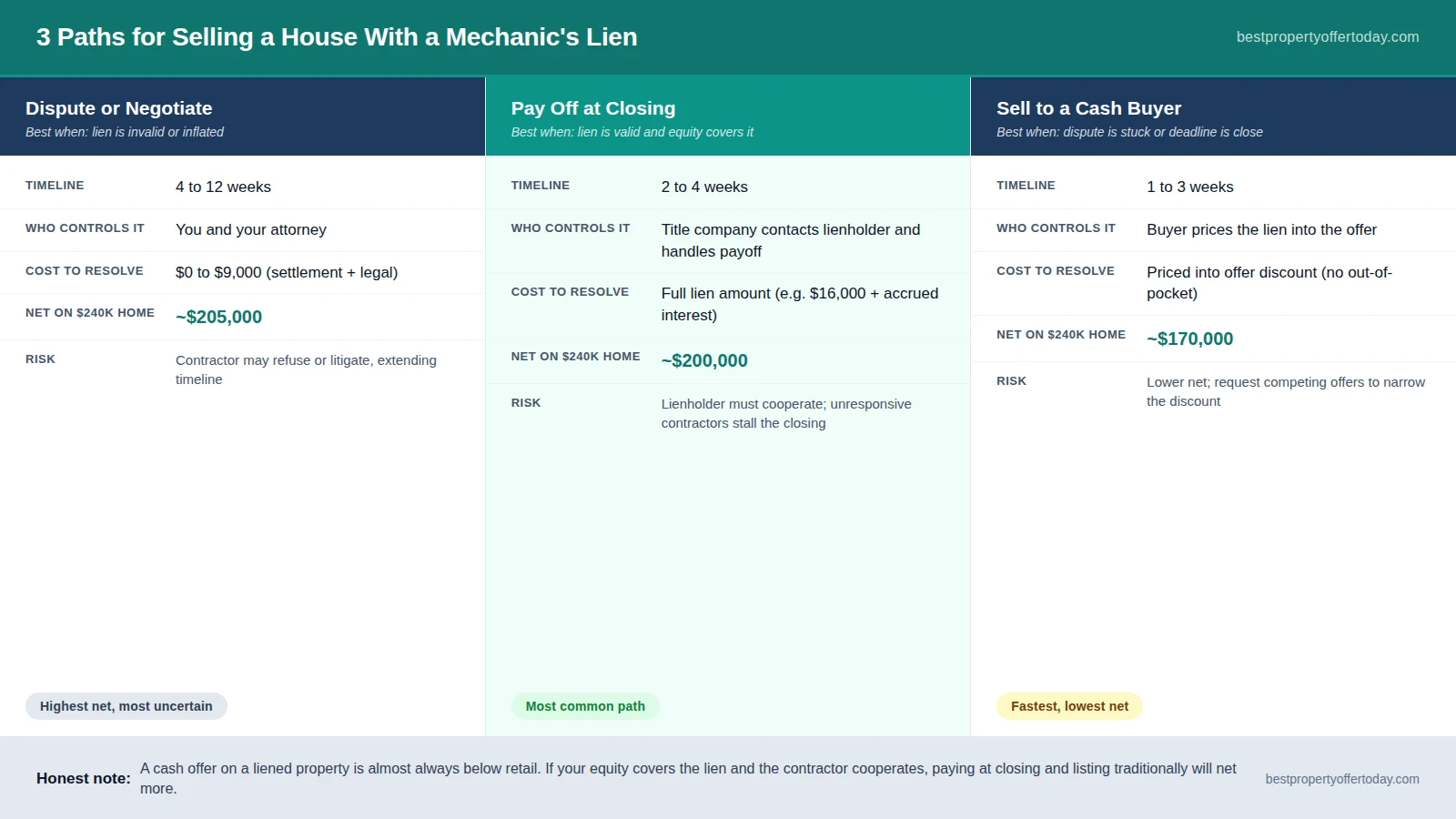
A mechanic’s lien filed by an unpaid contractor sits on your title like a hard stop. It will show up in every title search, it will prevent most lenders from funding, and it will send a lot of buyers walking. But it does not make your house unsellable. Sellers move through this situation every year by choosing one of three paths: dispute the lien, pay it off before closing, or sell to a cash buyer who prices the risk into the offer.
What a Mechanic’s Lien Actually Is
A mechanic’s lien (called a materialman’s lien in some states) is a legal claim a contractor, subcontractor, or supplier files against your property when they were not paid for work or materials. The lien attaches to the real estate itself, not to you personally. That distinction matters: if a sale closes without resolving the lien, the buyer inherits the encumbrance, and the contractor can still pursue the property.
Contractors do not need a court judgment to file. In most states they record the lien directly with the county recorder, and it becomes a public record the same day. Common situations that produce one:
- A roofing contractor finishes the job but is not paid the final draw
- A general contractor pays suppliers out of pocket and the homeowner disputes the bill
- A subcontractor the homeowner never hired directly is left unpaid by the GC
- A renovation project stalls mid-way and a payment dispute follows
Filing deadlines vary by state. California gives most contractors 90 days from completion of work. Texas allows 15 days after each calendar month of unpaid work for contractors in direct contact with the owner. Florida sets the deadline at 90 days from the last day of work or materials delivered. Enforcement deadlines are separate: in most states, a lien that is not pursued in court within one to two years expires automatically, but an expired lien can still appear in a title search and delay a closing until a formal release is recorded.
Why It Complicates a Standard Sale
Title insurance is the core problem. A title company will not issue a clean owner’s policy with an outstanding mechanic’s lien. Without title insurance, most buyers will not close, and most lenders will not fund. The sequence looks like this:
- The buyer’s lender orders a title commitment during the loan underwriting process
- The commitment lists the mechanic’s lien as a requirement for removal before closing
- The lender will not fund until that requirement is cleared
- The closing date slips while the seller works to resolve the lien
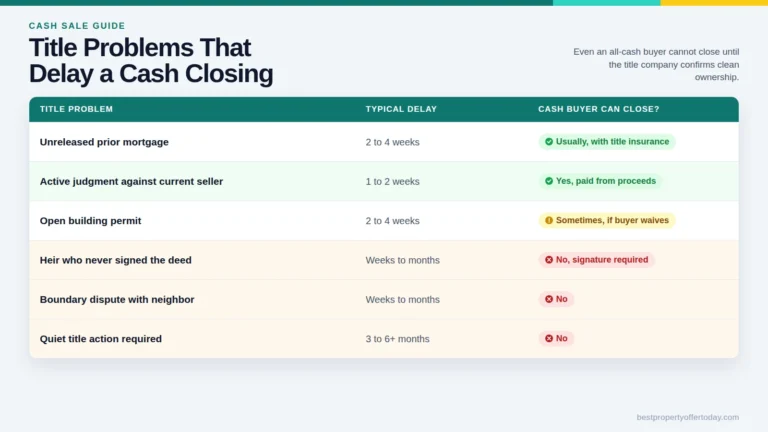
A buyer paying cash can waive title insurance, which is the key difference. A cash buyer who chooses to close without clearing the lien is taking on the enforcement risk, but that is a negotiation between buyer and seller, not a decision the lender controls. In practice, most cash buyers will price the risk into their offer rather than skip title insurance entirely. But they have flexibility that a financed buyer simply does not have. For a full picture of what else turns up in a title search and delays closings, see title problems that delay a cash closing.
The Three Paths Forward
Path 1: Dispute or Negotiate the Lien Down
Not every mechanic’s lien is valid. Common grounds for challenge include: the contractor missed the filing deadline, the work was not completed as contracted, the lien amount exceeds what was actually owed, or a subcontractor did not serve the required preliminary notice. An attorney familiar with your state’s lien law can review the filing and tell you whether it is enforceable before you spend money trying to resolve it.
Even a valid lien is negotiable. Contractors often accept less than the face amount when the alternative is an enforcement lawsuit that will cost them attorney fees and years of waiting. A lien recorded for $18,000 may settle for $10,000 to $12,000 if the seller can put cash on the table and close quickly. Get any settlement agreement in writing and record the release with the county before closing. A verbal agreement to release a lien is unenforceable once the contractor changes their mind.
Path 2: Pay the Full Amount at Closing From Sale Proceeds
This is the most common path when the lien amount is below what the house will net. The title company holds back the lien amount at closing, pays the contractor directly from the seller’s proceeds, records the release, and then issues the clean title policy. You receive the remainder.
The title company will contact the lienholder to confirm the payoff amount. That figure may be higher than the face amount if interest and filing fees have accrued since recording. Budget for this when running your net proceeds estimate. Our net proceeds calculator lets you enter custom deductions so you can see exactly what closes in your pocket after the lien, the mortgage payoff, and closing costs are settled.
The catch is that the contractor has to cooperate. If the contractor is unreachable, is in active litigation with you, or refuses to accept the payoff until a court orders it, the title company cannot clear the requirement and the closing stalls. This is where sellers sometimes find that the only realistic buyer is one paying cash, who can move faster than the dispute can be resolved.
Path 3: Sell to a Cash Buyer Who Prices the Lien Into the Offer
Cash buyers routinely price encumbrances into their offers. They have seen mechanic’s liens before, they know how to negotiate with lienholders, and they are not waiting on a lender who can veto the transaction at the last moment. The buyer will typically require the lien to be paid off from closing proceeds, discount their offer by enough to absorb it themselves, or some combination of both.
This is where collecting competing offers makes a real difference. A single cash buyer quoting a liened property is motivated to price the risk as high as possible. Multiple buyers quoting the same property compete that risk premium down. One buyer may price a $16,000 lien as a $30,000 discount. Another may price it at a $20,000 discount and structure the payoff through closing. Getting both numbers side by side costs nothing and can save you $10,000 or more on the final net.
Worked Example: $240,000 ARV, $16,000 Mechanic’s Lien
Say your house has an after-repair value of roughly $240,000, is in fair condition otherwise, and carries a $16,000 mechanic’s lien from an unfinished kitchen renovation where you and the contractor parted ways.
| Path | Sale Price | Lien Cost to Seller | Other Costs | Estimated Net |
|---|---|---|---|---|
| Dispute lien, settle for $9k, then list | $230,000 | $9,000 settlement | ~$14,000 agent and closing costs | ~$207,000 |
| Pay lien at closing, then list at retail | $230,000 | $16,000 from proceeds | ~$14,000 agent and closing costs | ~$200,000 |
| Cash buyer, lien paid from proceeds at closing | $190,000 | $16,000 from proceeds | ~$3,000 closing costs | ~$171,000 |
| Cash buyer, lien fully priced into discount | $173,000 | $0 (absorbed by buyer) | ~$3,000 closing costs | ~$170,000 |
The retail paths net more, but only if the lien resolves cleanly and the market cooperates during the weeks or months it takes to clear. If the contractor is uncooperative, a listing that goes under contract and then falls apart because the title company cannot clear the lien costs real time and sometimes real money in carrying costs. The cash path trades roughly $30,000 to $37,000 of net proceeds for certainty and a known closing date.
Whether that trade is worth making depends on your situation. A seller with time, a cooperative contractor, and enough equity to absorb the lien cost should pursue Path 1 or 2 and list at retail. A seller facing a foreclosure date, a divorce settlement deadline, or a job relocation has a different calculation. See the full cash offer versus listing with an agent comparison for the complete breakdown.
The Honest Limits of a Cash Sale
A cash offer on a liened property will almost always be below what a fully marketed retail sale would net after the lien is cleared. What you are buying is the ability to close on a known date without the outcome depending on whether your contractor returns a phone call. If the house is in good condition, the lien is small relative to your equity, and you have two or three months to work through the resolution, a traditional listing after clearing the lien is likely the better financial outcome.
We say this plainly because it is true, and because pretending otherwise loses credibility immediately. The purpose of collecting competing cash offers is to narrow the discount when a cash sale is genuinely the right path, not to convince sellers who have better options to take a lower price.
Red Flags When Talking to Cash Buyers About a Liened Property
- A buyer who says they will handle the lien with no written explanation of exactly how
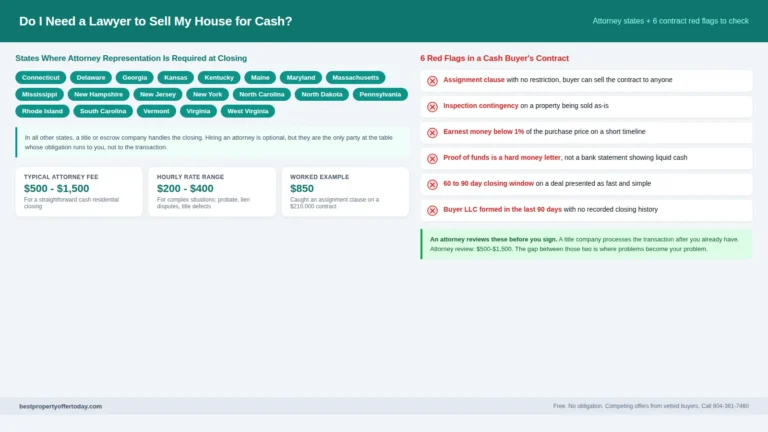
- An assignment clause in the purchase contract, meaning they may flip the deal to a third party who has not reviewed the lien documentation
- Token earnest money on a $170,000 deal (anything under $1,000 suggests they are not serious)
- No proof of funds, or a proof-of-funds letter that is undated or cannot be verified with the issuing institution
- A purchase price that drops materially after their so-called inspection once you are already under contract
For more on what legitimate cash buyers look like and what documents should accompany a credible offer, see are cash home buyers legitimate.
What the Title Company Does When the Lien Is Paid at Closing
When a mechanic’s lien is being paid from closing proceeds, the title company or closing attorney steps through the following:
- Contacts the lienholder and requests a formal payoff statement with a per-diem interest figure
- Holds the payoff amount in escrow from the seller’s proceeds at closing
- Pays the lienholder after closing funds, receives a signed lien release, and records it with the county recorder
- Issues the clean title policy after the release is confirmed in the public record
This process adds two to five business days to a normal closing timeline, sometimes more if the lienholder is slow to respond or disputes the payoff amount. In attorney-closing states, Georgia, South Carolina, Massachusetts, and New York among them, a real estate attorney handles this process rather than a title company directly.
Frequently Asked Questions
Does a mechanic’s lien expire on its own?
Yes, but the timeline varies by state, and the lien does not disappear from the title record without a formal release. In California, a claimant must file a lawsuit to enforce the lien within 90 days of recording, or it expires. In Florida, the enforcement window is one year. An expired but unreleased lien will still appear in a title search, and the title company will require either a written release from the lienholder or a court order before issuing insurance. A quiet title action can force the release if the contractor is unresponsive, but that process takes several months and costs between $2,000 and $6,000 in attorney fees depending on the state.
Can a contractor file a lien without a written contract?
In many states, yes. If you gave oral consent to the work and the contractor can demonstrate it, a written contract is not required for a valid lien filing. Some states require a contractor to serve a preliminary notice to the property owner before a subcontractor can file, but a contractor who had direct contact with you may not need to send that notice at all. If you believe a lien was filed without legitimate grounds, an attorney can assess whether the filing meets your state’s specific statutory requirements before you spend money fighting it.
What if the mechanic’s lien amount is more than my equity?
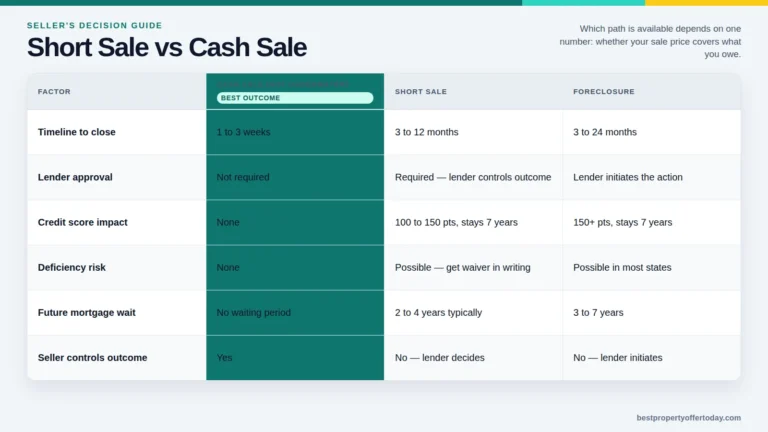
This situation is uncommon for mechanic’s liens, which are usually proportional to the work performed, but it does happen when a large renovation goes badly wrong. If the combined total of the lien, the mortgage balance, and closing costs exceeds what the house will sell for, you are looking at a short sale or bringing cash to the table. A short sale requires lender approval, takes months, and affects your credit. A cash buyer will not fix a negative-equity problem, but they can sometimes move faster than a short sale, which matters if a foreclosure date is approaching. Call 804-361-7460 if you want to understand what offers would look like in your specific situation.
Do you have to disclose a mechanic’s lien when selling as-is?
Yes. An as-is sale limits your obligation to make repairs, not your obligation to disclose known encumbrances. A mechanic’s lien is a material fact that must be disclosed in virtually every state. Concealing it exposes you to fraud claims and can unwind a closed transaction. The lien will appear in the title search regardless, so concealment accomplishes nothing except legal exposure. Disclose it upfront, provide the documentation, and let the buyer price accordingly. The disclosure duty survives an as-is sale the same way it does in any other transaction.
If the encumbrance on your title is a court judgment rather than a contractor claim, the rules are different. A judgment lien attaches through civil litigation, not through a construction notice process, and the homestead exemption rules vary significantly by state. See the judgment lien selling guide for the full breakdown.