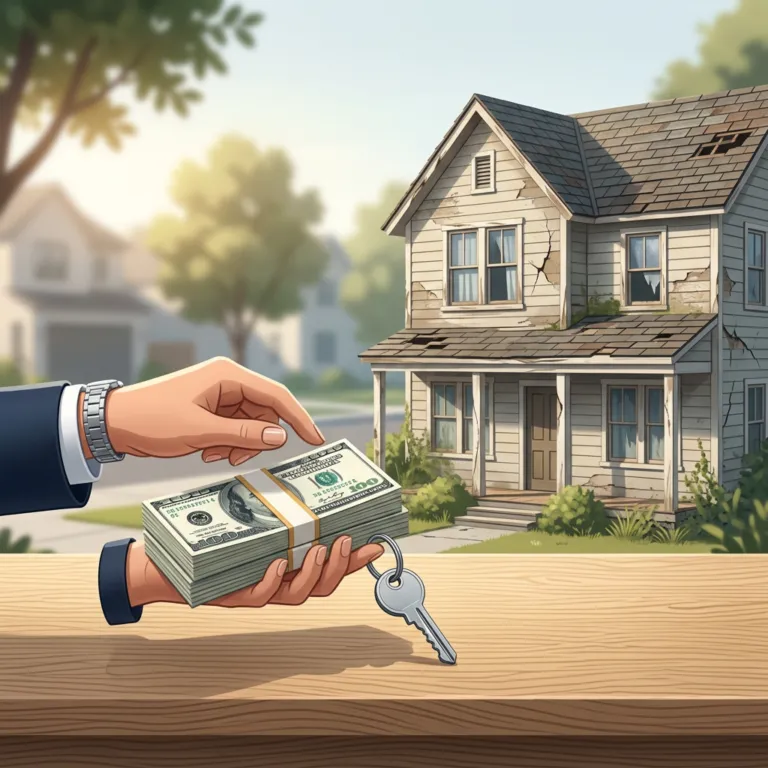
A cash offer is a direct purchase of your home without bank financing, appraisal requirements, or repair contingencies. The buyer has the funds ready and closes in as few as 7 to 14 days, compared to the 30 to 45 days typical for financed sales. No inspections, no “subject to appraisal” clauses, no last-minute financing surprises.
The Key Difference Between Cash and Financed Offers
When a traditional buyer makes an offer, their purchase is contingent on getting bank approval, passing an appraisal, and passing an inspection. The bank controls the timeline and can still walk away if the appraisal comes in low. A cash buyer skips all of that. They already have the money. The offer is firm, not contingent on anything.
This is why cash offers close faster and feel more certain to sellers. There’s no financing risk, no inspection renegotiations, and no waiting for underwriting approval.
How the Cash Offer Process Works, Step by Step
- Get the offer. A cash buyer views your property and makes a written offer. You get multiple offers to compare if you submit your home for cash offers.
- Review and accept. You review the offer terms, including price, closing date, and any contingencies. Unlike financed offers, cash offers typically come with no inspection contingency, meaning they buy the home as-is.
- Proof of funds. The cash buyer provides proof they actually have the money (usually a bank statement or letter from their lender showing available funds). This is non-negotiable for a legitimate offer.
- Title search and closing prep. An attorney or title company verifies ownership, checks for liens or unpaid taxes, and prepares closing documents. This usually takes 5 to 10 business days.
- Close and transfer. You sign closing documents, the buyer wires the funds, and the deed transfers to them. The cash funds the entire purchase at closing, no mortgage lender involved.
Why Sellers Choose Cash Offers
Cash sales offer three major advantages over traditional financed sales:
- Speed. Closing in 7 to 14 days instead of 30 to 45 days means you can move, relocate, or settle debts much faster.
- Certainty. No appraisal falling short, no financing falling through, no last-minute surprises. If the offer is accepted and proof of funds is verified, it closes.
- No repairs required. Cash buyers buy homes as-is. You don’t need to fix anything, paint, or stage the property for showings. That saves thousands in repairs and months of active listing time.
What Cash Offers Usually Cost Less Than Market Value
Cash offers typically run 70% to 90% of your home’s fully repaired market value. Why the discount? Because the buyer is absorbing the repair costs, the renovation timeline, and the risk that the property might sit longer than expected on a resale. That risk premium is reflected in the lower purchase price.
The key is comparing multiple offers on equal terms. One cash buyer might offer $180,000 while another offers $210,000 for the same house, depending on their repair estimate and risk tolerance. Our guide to comparing cash offers side by side covers what to normalize before deciding: net to seller versus headline price, who pays which closing costs, and what inspection deductions can appear after the fact. See our detailed worked example of how cash buyers calculate offers so you understand exactly where their number comes from.
I thought a cash offer meant I’d lose 50% of my home’s value. But after comparing three different offers through Best Property Offer Today, I realized the first offer I got wasn’t bad at all. The second one was actually $25,000 higher just because that buyer had different repair assumptions.
Questions About the Cash Offer Process
Do I have to accept the first cash offer I get?
No. Always get multiple cash offers before deciding. Offers can differ by $20,000 or more on the same property, so comparing is essential.
What if the cash offer is much lower than I expected?
Ask the buyer for their repair estimate and comps list. If their numbers seem off, get a second opinion from a contractor or get another offer to compare. Sometimes buyers are overly conservative.
Are cash offers only from investors?
Most are, but some come from individuals or entities with significant liquid assets. Either way, proof of funds is your protection.
Can I negotiate a cash offer after I get it?
Yes. If an offer is $10,000 below what you think is fair based on other offers, you can counter. Many cash buyers expect some negotiation.
What closing costs do I pay on a cash sale?
Typically title insurance, attorney or title company fees, and any unpaid property taxes or liens. These vary by state but usually total 1% to 3% of the sale price. The buyer may cover some of these as part of negotiation.
Want to see the math on your own home? Run the numbers with our net proceeds calculator, which compares a cash sale against a traditional listing side by side.
Get Multiple Cash Offers to Know Your Home’s Real Value
Compare cash offers today and see how much you could get for your home. Each offer shows you exactly how a professional buyer values your property, and comparing them reveals the true range of what it’s worth in your market. Ready to sell? Get your free cash offer now.