Back to all articles
Uncategorized

Earnest Money in a Cash Sale: How Much Is Enough?

Earnest Money in a Cash Sale: How Much Is Enough?

In a cash sale, 1 to 2 percent of the purchase price is the standard earnest money deposit. On a $280,000 offer, that means $2,800 to $5,600. Anything below $1,000 on a house in that range is a signal worth paying attention to, and not a small one.

What Earnest Money Actually Is in a Cash Transaction

Earnest money is a deposit the buyer puts down, held in escrow, to show the seller the deal is real. At closing it applies toward the buyer’s costs. If the buyer backs out without a valid contract reason, the seller keeps it.

In a financed sale, the buyer’s earnest money is modest because they already have significant skin in the game: a lender is going to underwrite them, order an appraisal, and put them through weeks of approval. A cash buyer has none of that. The cash buyer can decide next Thursday they do not want the house, and if the deposit was $500, walking away costs them very little.

That is the reason earnest money matters more in a cash sale, not less. The deposit is often the only financial commitment a cash buyer has made before closing day.

What the Numbers Look Like in Practice

Standard ranges vary by region, but for cash sales these are the thresholds that matter:

  • 1 to 2 percent of the offer price is the range a serious individual buyer or small investor typically puts down
  • Some institutional buyers and iBuyers offer a fixed dollar amount, often $1,000 to $5,000
  • Wholesalers and assignment buyers routinely offer $100 to $500, sometimes less
  • Competitive markets sometimes see 3 to 5 percent deposits from buyers who want to stand out

The percentage matters less than what the actual dollar amount communicates. On a $310,000 offer, a $500 deposit means the buyer can walk away for the cost of a restaurant dinner. On the same offer, $4,000 to $6,200 means they have something real to lose.

A Worked Example: Two Offers on the Same House

Take a house under contract for $295,000 cash. Two buyers present offers the same week.

Buyer A offers $295,000 with a $500 earnest money deposit, a 21-day inspection period on an as-is sale, and a 30-day close. The contract includes an assignment clause allowing the buyer to transfer the contract to another party.

Buyer B offers $290,000 with a $4,500 earnest money deposit, a 7-day inspection period, and a 21-day close. No assignment clause.

Buyer A is offering $5,000 more on paper. But if Buyer A walks on day 20, the seller gets $500 and loses three weeks. By then, they may have turned away other buyers. If Buyer B walks, the seller keeps $4,500 and has lost three weeks instead of four.

The contract with a higher deposit and a tighter timeline is almost always the stronger contract. Price is one variable. Commitment is another.

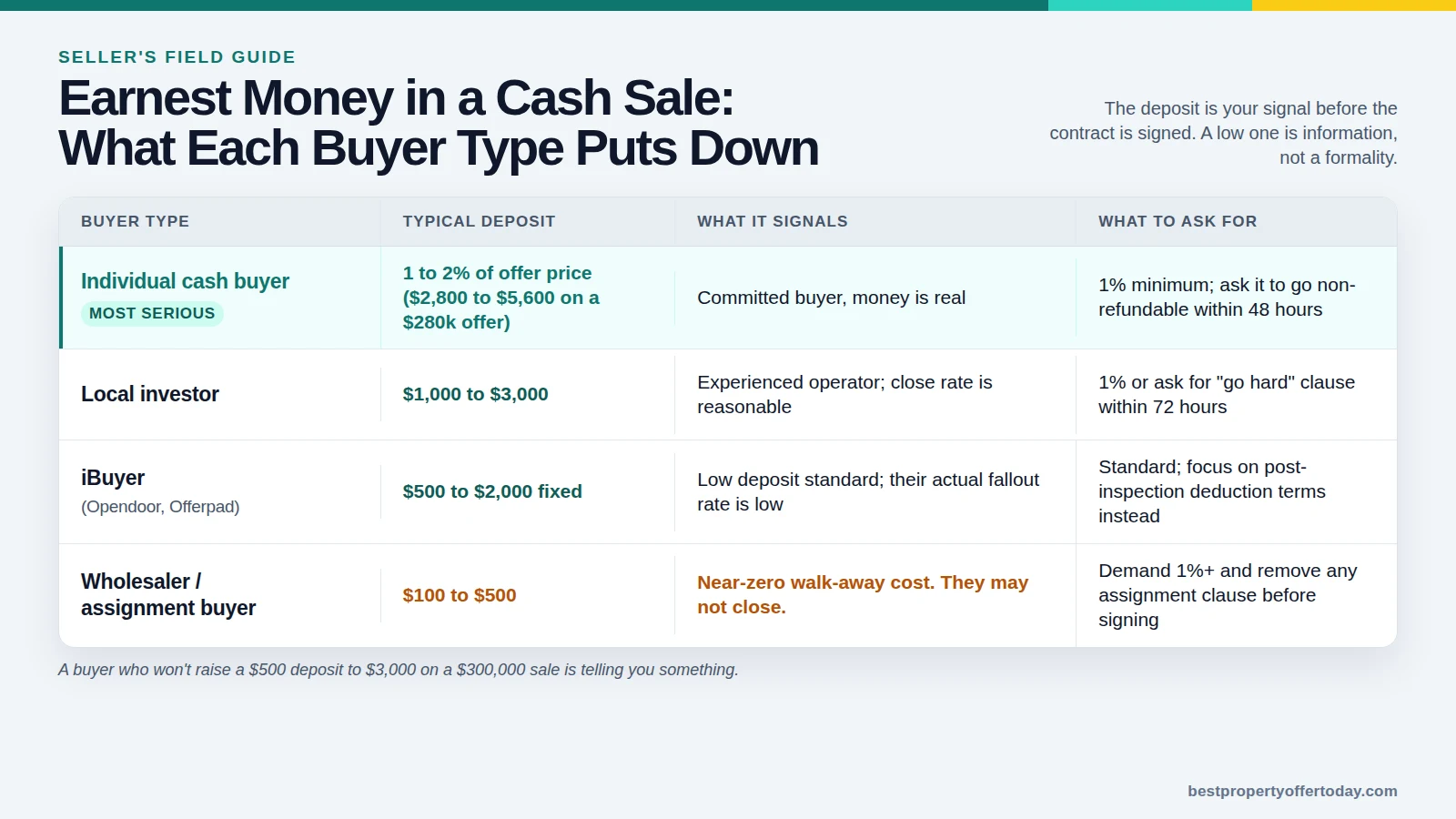
Deposits by Buyer Type

Buyer type Typical deposit What it signals
Individual cash buyer 1 to 2% of offer price Committed buyer, money is real
Local investor $1,000 to $3,000 Experienced operator; close rate is reasonable
iBuyer (Opendoor, Offerpad) $500 to $2,000 fixed Low deposit standard; their actual fallout rate is low
Wholesaler or assignment buyer $100 to $500 Near-zero walk-away cost; may not close

iBuyers are worth noting separately. They tend to put down small fixed deposits, but their actual fallout rate is lower than a wholesaler’s because they are closing with their own capital. The deposit is not always the best predictor for institutional buyers. For individuals and small operators, it is usually a reliable signal.

Why Wholesalers Use Low Deposits, and How to Spot Them

A wholesaler does not plan to buy your house. They plan to get your house under contract, then find another buyer and assign that contract to them for a fee. If they cannot find a buyer at a price that works, they walk. The earnest money deposit is what they risk when that happens.

A $500 deposit is not a mistake. It is a calculated limit on their exposure. Read more about what a real estate wholesaler actually does before accepting any offer from someone you cannot verify as the principal buyer.

Red flags that tend to accompany a low deposit:

  • An assignment clause or the phrase “and/or assigns” in the buyer name field
  • A long inspection window on a property being sold strictly as-is (7 to 21 days is common; a serious cash buyer rarely needs more than 5 to 7)
  • Vague or delayed proof of funds, or funds from a line of credit rather than a bank account
  • A closing date that is unusually far out (45 to 60 days on a cash sale, when the norm is 14 to 21)
  • Pressure to sign quickly before you can compare other offers

Can You Negotiate the Deposit Amount

Yes, and you should if the initial offer comes in low. The deposit amount is a contract term like any other. Asking for a higher deposit does not kill a serious deal. A buyer who refuses to increase a $300 deposit to $3,000 on a $300,000 house is telling you something.

A reasonable counter is to ask for the deposit to match at least 1 percent of the purchase price. On most offers, that is a number a real buyer will accept. You can also ask for the deposit to go hard immediately or within 24 to 48 hours, meaning non-refundable once paid. A wholesaler looking to assign the contract will often decline that condition. A genuine buyer usually does not object.

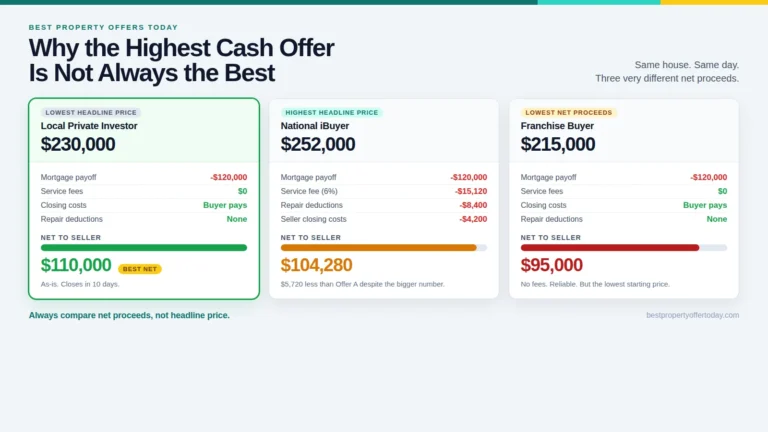
When you receive multiple competing cash offers, the deposit amount is one of the four or five terms worth comparing line by line alongside the headline price. The net proceeds calculator helps you compare what each offer puts in your pocket. The deposit and close date are terms you compare manually.

Where the Money Goes and Who Holds It

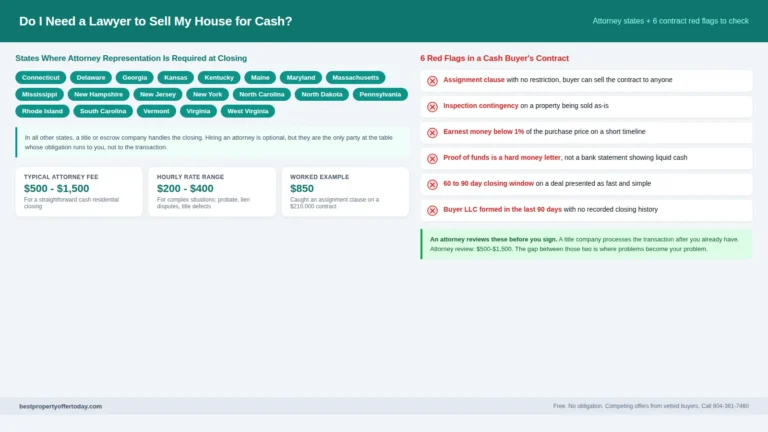
Earnest money in a cash sale is held in escrow. In most states, that means a title company. In attorney states, including Georgia, South Carolina, North Carolina, Massachusetts, and New York, it typically goes to the closing attorney’s trust account. The money does not go to the seller at contract signing. It sits until closing, at which point it is applied toward the buyer’s final payment.

If the buyer backs out for a reason the contract allows, the deposit returns to the buyer. If they back out without a valid contract reason, the seller can make a claim. In practice, disputes over earnest money get complicated. The title company or attorney will typically require written consent from both parties or a court order before releasing contested funds. See what actually happens when a cash buyer backs out for how those disputes play out in practice.

The Honest Tradeoff Worth Naming

Cash offers, including those that come with a solid deposit, are usually below what a fully marketed listing would bring in a normal market. The seller is accepting less money in exchange for speed, certainty, and no repair obligations. If the house is in reasonable condition and the seller has 60 to 90 days, a traditional listing with a licensed agent typically produces a higher net. A cash sale makes the most sense when speed, condition, or circumstances make a traditional sale impractical or too costly to prepare for.

The deposit is one part of the deal structure, not a substitute for running the full comparison. Use the net proceeds calculator to see what each path actually puts in your pocket before deciding.

Common Questions About Earnest Money in Cash Sales

Is $1,000 enough earnest money on a cash offer?

On a house under $100,000, $1,000 is borderline adequate. On anything above $150,000, $1,000 is low. A buyer offering $1,000 on a $300,000 cash deal is putting up less than half a percent. Ask for more. A serious buyer will agree.

When is the earnest money due after the contract is signed?

Most contracts specify 1 to 3 business days after the executed contract is delivered. Some state-approved contract forms have a fixed window. If the contract you have been presented is vague on timing, ask for clarification before signing. Delays in delivering the deposit after signing are another soft red flag worth noting.

What happens if the buyer pays the deposit but cannot close?

In a cash sale without a financing contingency, the buyer has limited contract grounds to exit and recover their deposit. If they simply change their mind or cannot produce the funds they claimed to have, you can make a claim against the earnest money. Getting it released without a fight depends on whether the buyer cooperates. Read the dispute resolution section of your contract carefully before signing.

Does getting multiple cash offers help with deposit amounts?

Multiple offers put you in a much better position to negotiate every term, including the deposit. When buyers know others are competing, they tend to sharpen their numbers across the board. You can also use competing offers as leverage to push a preferred buyer toward a higher deposit or a faster go-hard date. Submit one request to receive competing offers from vetted buyers in our network. It is free to the seller and there is no obligation to accept any offer.

Ready to Get Your Cash Offer?

Compare multiple cash offers for your home. It's free and takes just minutes.