When you decide to sell your home, you want to know your options. Cash buyers represent a legitimate path that many homeowners overlook, often because they don’t understand how to identify real buyers or compare what different offers actually mean. If you’re considering a cash sale, you need to know how to find credible cash buyers and evaluate their offers fairly.
Who Are Cash Buyers and What Do They Do
Cash buyers are real estate investors or companies that purchase properties directly from sellers using their own capital. Unlike traditional buyers who need mortgage financing, cash buyers have funds available immediately, which is what allows them to close quickly and with certainty.
Cash buyers work across all property types and conditions. They buy homes that need work, inherited properties, rental homes, and properties facing time pressure. Their business model depends on purchasing properties below market value, improving them when necessary, and reselling for profit. This means their offers are typically 5-15% below what you might get in a traditional sale, but the trade-off is speed, simplicity, and certainty of closing.
How to Identify Legitimate Cash Buyers
Not all cash buyers operate the same way, and some operate with less integrity than others. To identify legitimate cash buyers in your area, start with online research and referrals. Look for established companies with verifiable track records, customer reviews, and a physical business presence.
A legitimate cash buyer will provide references, show proof of funds, and explain their process clearly. They won’t pressure you into a quick decision, and they’ll be transparent about their business model and how they arrived at their offer. Avoid anyone who avoids direct questions, pressures you to sign quickly, or promises unrealistic prices.
What to Look for in a Cash Offer
When comparing cash offers, don’t just look at the number. A higher offer from a questionable buyer is worth less than a lower offer from someone reliable. Evaluate the entire offer, including the timeline, contingencies, and the buyer’s reputation.
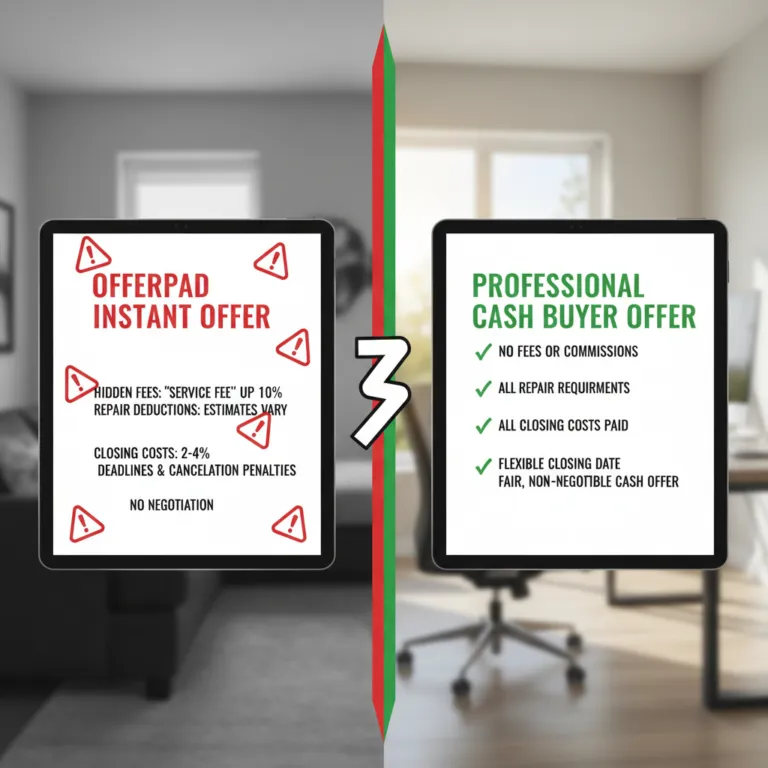
Key factors: How quickly can they close? Are there any contingencies (inspections, appraisals, financing)? Do they require you to make repairs? What are their fees, if any? A true cash offer has no financing contingencies, requires no repairs, and can close as-is. If an offer has hidden costs or unexpected requirements, the net amount you receive could be much less than it appears.
Comparing Your Options: Cash vs. Traditional Sale
A cash sale closes faster and with less hassle, but at a lower price. A traditional sale takes longer and involves more work, but might net you more money. The right choice depends on your timeline, your home’s condition, and your personal situation.
Run the numbers both ways. Calculate what a cash sale would net you after closing by subtracting the offer and comparing it to a market sale minus realtor commissions, repairs, staging, and holding costs. For many sellers, especially those with properties needing significant work or those facing urgent timelines, a cash sale nets more money with far less stress.
The Advantages of Working With a Cash Buyer
Beyond price and speed, cash buyers offer other real advantages. You avoid realtor commissions (typically 5-6%), you sell as-is with no repair requirements, and you eliminate uncertainty. A cash buyer’s offer is firm, not subject to appraisals or market fluctuations. You know exactly when you’ll close and how much you’ll receive.
This certainty is valuable, especially if you’re facing a deadline, dealing with inherited property, managing a rental, or dealing with a property that wouldn’t appeal to traditional buyers.
Red Flags to Avoid With Buyers
Stay away from buyers who demand upfront fees, refuse to provide references, pressure you to sign quickly, or make vague promises. Legitimate cash buyers don’t require payment before the sale is complete, don’t hide their identities or business structure, and don’t use high-pressure tactics.
If something feels wrong, trust that instinct. There are plenty of reputable cash buyers competing for your business, so you don’t need to work with anyone you don’t feel comfortable with.
Frequently Asked Questions
How much lower is a cash offer than a market sale? Typically 5-15% below market value, depending on the property’s condition and local market dynamics. However, after accounting for sales commissions and repairs, cash sales often net similar or better proceeds.
Can I negotiate a cash offer? Yes, absolutely. Cash offers are starting points, not final numbers. If you have multiple offers or know the property’s value, you can counter and negotiate.
What happens if a cash buyer backs out? With a legitimate cash buyer, backup is rare because they already have the funds and aren’t dependent on financing. Verify proof of funds before signing.
How quickly can a cash sale close? Most cash sales close in 7-14 days. Some close in as little as 3-5 days if needed. This is a major advantage over traditional sales that take 30-45 days or longer.
Do cash buyers buy houses in any condition? Yes. Cash buyers purchase properties as-is, whether they need cosmetic work, structural repairs, or full renovations. You don’t pay for any improvements.
Find Qualified Cash Buyers for Your Home
If you’re curious about what your home is worth to a cash buyer, there’s no risk in exploring your options. Get your free cash offer from a qualified buyer and see how the numbers compare to a traditional sale. Understanding what cash buyers will pay gives you real negotiating power, even if you decide to list traditionally.
The key to a successful home sale, whether for cash or through traditional channels, is making an informed decision based on facts, not emotions.